I’ve talked to dozens of mid-size hotel chains this year. The same question keeps coming up: “Can we order custom lobby furniture without committing to 2,000-piece minimums?”
Short answer: yes. And the economics have shifted enough that it’s worth a closer look.
The MOQ Myth in Contract Furniture
Five years ago, most Guangdong factories wouldn’t touch orders below 1,000 units. Raw material procurement, tooling costs, and production line setup made small runs unprofitable.
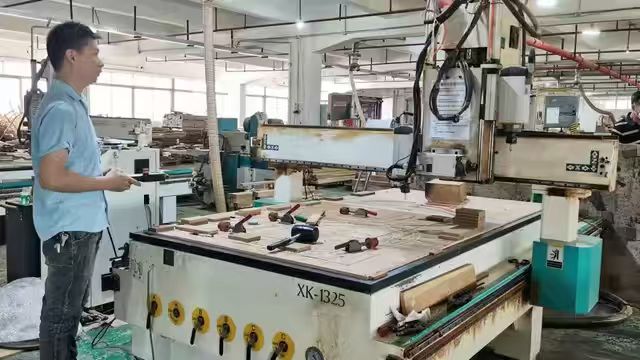
That’s changed. CNC routing and modular jig systems cut changeover time from 3 days to about 6 hours. I visited a factory in Foshan last month running 300-piece custom sofa orders profitably at margins above 18%.
The key shift: flexible production cells replaced fixed assembly lines. A single cell handles cutting, edge-banding, and pre-assembly for orders as small as 200 pieces.
Real Numbers From Recent Projects
Here’s what a 400-unit custom dining chair order looked like for a boutique hotel group in Southeast Asia:
- Unit cost: $47 (vs. $39 at 1,500 units — a 20% premium, not 50%)
- Lead time: 35 days (vs. 28 days for large runs)
- Tooling fee: $1,200 one-time (amortized to $3/unit)
- Design iterations: 2 rounds included
Total landed cost difference versus a bulk order? About $4,400. For a project with a $180,000 FF&E budget, that’s noise.

When Small-Batch Custom Makes Strategic Sense
Not every project needs this. But three scenarios keep showing up:
1. Pilot programs. A hotel brand testing a new room concept across 4 properties doesn’t want 5,000 nightstands before validating the design. Order 400, test for 6 months, then scale.
2. Regional differentiation. Chains operating in multiple markets need localized aesthetics. A 300-piece run of culturally-specific lobby pieces costs less than you’d think.
3. Replacement cycles. Properties replacing worn F&B furniture in phases — 150 chairs this quarter, 150 next — avoid capital expenditure spikes.
What to Ask Your Factory Partner
If you’re evaluating suppliers for smaller custom runs, these questions filter out the ones who’ll waste your time:
- What’s your actual MOQ per SKU, not per order?
- Do you run flexible cells or fixed lines?
- Can you show me a recent project under 500 pieces with timeline data?
- What’s your defect rate on short runs vs. standard production?
Factories running modern cells typically hit 2-3% defect rates on small batches. If someone quotes you above 5%, their process isn’t optimized for this.
The Supply Chain Angle
Smaller orders also mean simpler logistics. A 400-piece chair order fits in a single 40ft container with room for packaging optimization. No split shipments, no consolidation fees, no warehouse staging.
I’ve seen total logistics costs drop 12-15% on sub-500 orders compared to what buyers expect, simply because the shipping math is cleaner.
For procurement teams managing multiple property openings, this flexibility matters more than saving $3/unit on a massive bulk order that arrives 60 days before you need it — eating warehouse costs the whole time.
The market’s moved. Factories that adapted their production architecture are winning these mid-size contracts. The ones still quoting 1,000-piece minimums are losing business to more agile competitors.
If you’re sourcing hotel furniture or restaurant seating in quantities under 500, reach out. We run these orders regularly and can share reference projects.