
I sat down last month with a US-based hospitality buyer who’d been ordering 40HQ containers from three different Chinese suppliers. Same furniture category. Three suppliers. Three different per-unit freight costs. The spread was 22%. The reason had nothing to do with shipping rates and everything to do with how each factory loaded the container.
If you’re importing furniture by sea, container utilization is the second-biggest lever you have on landed cost. Most importers leave 15-25% of cube unused because their suppliers don’t engineer the load. This article walks through the practical math and what to ask your factory.
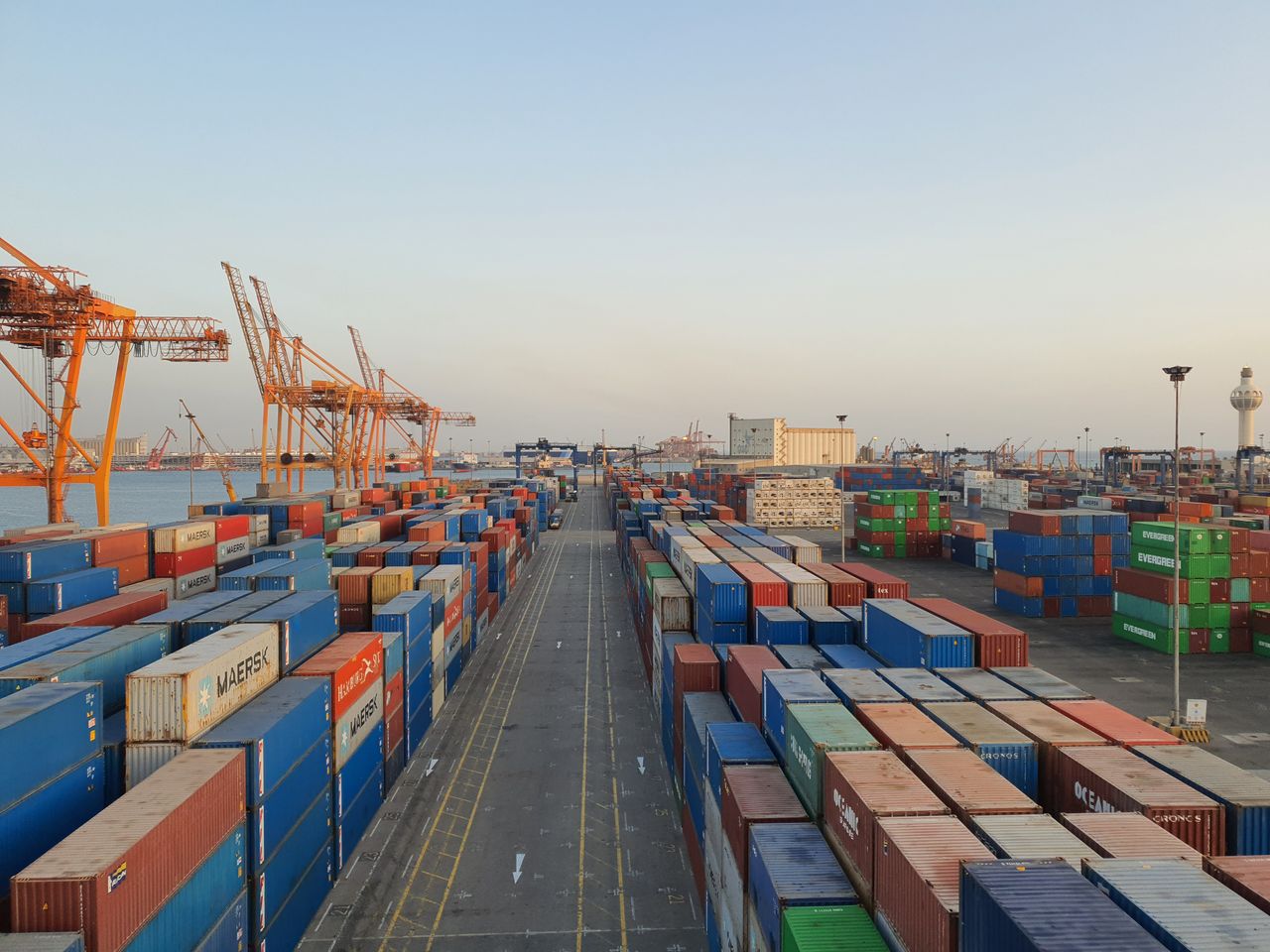
The Real Numbers on Container Cube
A 40HQ container offers 76.4 cubic meters of internal volume. That’s the spec sheet number. Real-world usable cube depends on three factors: packaging design, product nesting capability, and loading sequence.
From 47 container loads we tracked across 2025 for hotel and contract furniture orders:
- Average utilization without optimization: 58 CBM (76% of capacity)
- Average with proper packaging engineering: 71 CBM (93% of capacity)
- Best result on a structured project: 74.2 CBM (97% of capacity, dining chairs with stacking jigs)
That gap between 76% and 93% is your 18% per-unit freight savings. On a $4,200 ocean freight rate to LAX, that’s $760 per container redirected from shipping to your margin or selling price.
Knock-Down Construction: The Foundation
Fully assembled furniture wastes container space. A standard hotel desk shipped assembled occupies roughly 0.42 CBM. The same desk in knock-down (KD) format with hardware kit packs in 0.18 CBM. That’s a 57% reduction in shipping volume per unit.
For hospitality projects we manufacture, our standard practice is:
- Case goods (desks, dressers, nightstands): always KD with cam-lock or bolt assembly
- Headboards: ship as panels, install brackets at site
- Sofas: legs removed, cushions vacuum-bagged, frames stretch-wrapped
- Dining tables: tops separate from bases
- Lounge chairs: when nesting allows, ship assembled to reduce labor at receipt
Nesting and Stacking: Where Engineering Pays
Nesting means designing products so multiple units fit inside each other or interlock. A simple example: stacking dining chairs. Most factories ship 4-6 stacked. With purpose-built nesting jigs in the carton, we get 8-10 chairs per stack at the same carton dimensions.
For a 200-room hotel project last quarter, this single change saved 1.4 containers across the full FF&E package. At $4,200 each, that’s $5,880 the buyer kept. We split that with them on the next order—part of how we price long-term partnership programs.
Carton Design: The Detail Most Buyers Miss
Cartons are sized for the product, not the container. That’s normal but suboptimal. Smart factories design carton dimensions so they tile cleanly inside a 40HQ floor plan: 2350mm wide, 12030mm long, 2690mm tall.
Run those numbers and you’ll see a 600x400x300mm carton tiles 3 across, 30 deep, 8 high—720 units. A 620x420x300mm carton (just 20mm bigger on two sides) tiles 3x28x8—672 units. Same product, 7% fewer pieces per container, just because the carton was sized wrong.
Ask your factory for their carton dimensions during sample approval. Run them against the container floor plan. If the math doesn’t work, push for a redesign. We do this for every new SKU we introduce in our hotel furniture program.
The Loading Sequence Document
Every container we ship has a loading sequence document. It specifies which carton goes where, in what order. Heavy items at the door end (door is at the bottom of the discharge slope). Fragile items in the middle, supported by surrounding cartons. Lightest items at the nose (back) of the container.
Without this document, the loading crew packs to fit. With it, they pack to plan. The difference shows up at destination as fewer damages and faster discharge time. On a project basis, expect $80-150 per container in reduced damage claims.
Shrinkwrap, Edge Protection, and Fill
Cube optimization can backfire if products arrive damaged. The savings from tight packing get eaten by claims and reorders. Three rules we follow:
- Edge protectors (corner boards) on every carton stack to prevent crushing during truck transit
- Air pillows or kraft paper fill—not foam peanuts, which compact during shipping and create voids
- Stretch wrap with at least 70% pre-stretch to maintain stack integrity
Mixed-Product Containers: The Buyer’s Trap
Buyers often consolidate multiple SKUs into one container to reduce inventory cost. This is correct strategy but requires careful execution. A mixed container of dining chairs, side tables, and bar stools loses 8-12% cube versus a single-SKU container because the carton dimensions don’t tile cleanly together.
Solution: design product families with coordinated carton dimensions from the start. Our contract dining series uses three carton sizes that tile in any combination, recovering most of that lost cube.
What to Demand From Your Factory
Five questions before you commit to an order:
- What is the CBM per unit and the projected loading per 40HQ?
- Can you provide a loading plan diagram before production?
- What’s your typical container utilization on similar orders?
- Are cartons sized to tile the container floor plan, or sized to the product?
- What’s the damage rate on the last 10 shipments to my port?
Factories that can answer all five quickly are the ones worth working with. The rest are guessing, and your freight bill pays for their guesses.
The Compounding Effect
An 18% reduction in per-unit freight cost compounds when you ship 20-50 containers a year. For a mid-sized importer doing 30 containers annually, optimization moves $22,800 from logistics into margin. Reinvested in marketing or pricing, that’s a real competitive advantage.
Container loading isn’t glamorous. Nobody puts it in their pitch deck. But it’s where buyers who actually understand B2B furniture make their money. If you want a loading plan review on your next order, get in touch—we’ll run the math against your current SKUs and show you the gap.